Why do we still expect golfers to shoot lower scores when most of their “training” happens in a consequence-free environment?
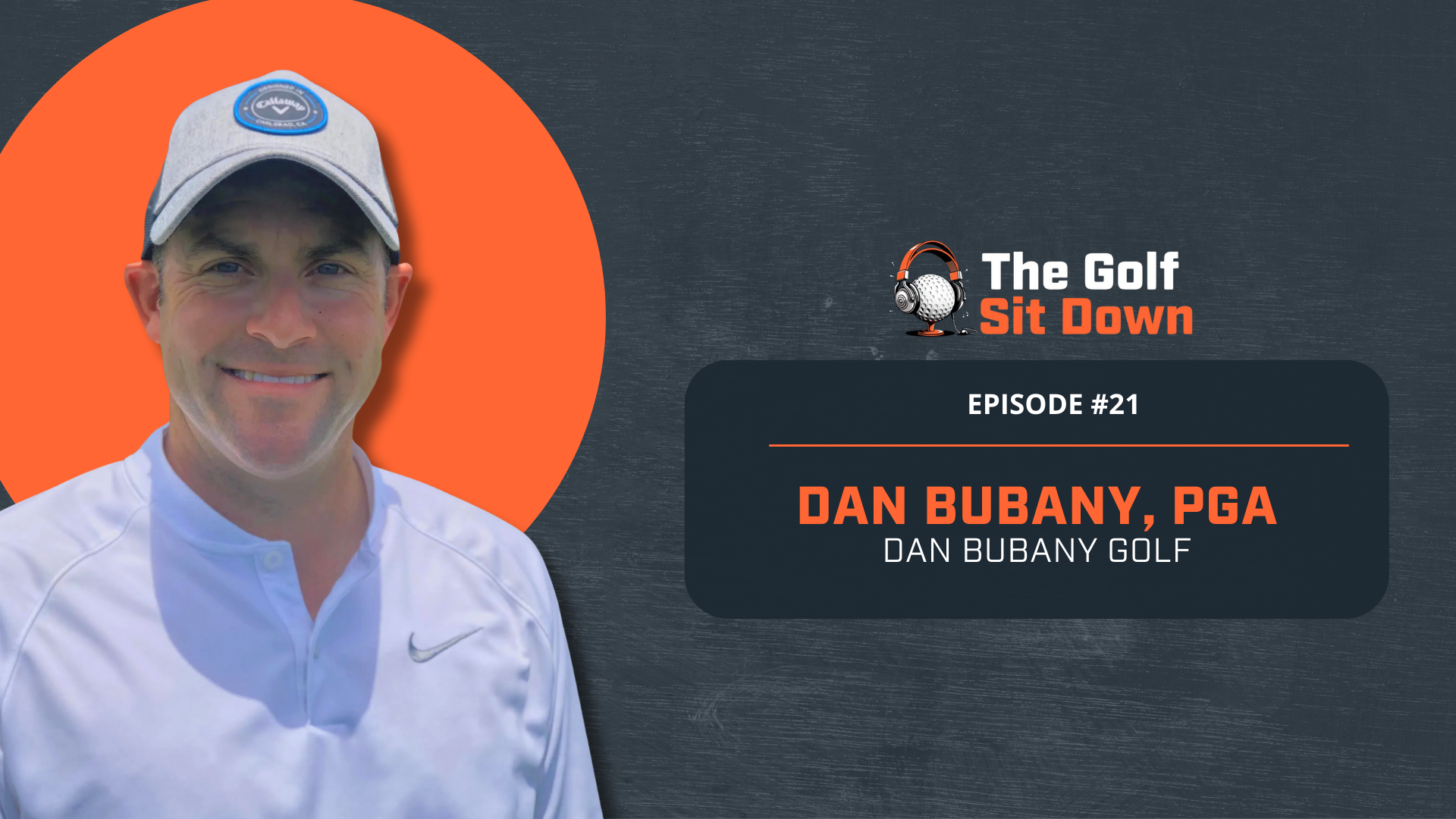
In this episode of The Golf Sit Down, Ryan, Seth, and AJ sit down with Dan Bubany, PGA to challenge one of golf’s most accepted assumptions: that the fastest path to improvement is a steady stream of one-on-one lessons on the range. Dan’s coaching journey—from broadcast journalism to full-time on-course coach—reveals what actually accelerates development for juniors and adults alike: group coaching, on-course reps, community accountability, and results-based training that focuses on playing golf (not just swinging a club).
It’s a must-listen for coaches building programs, parents navigating development decisions, and golfers tired of “looking great on the range” but not seeing it show up on the scorecard.
What You’ll Hear About:
- Coach vs. instructor: Why “what golfers want” isn’t always what they need to reach their goals.
- Why group coaching retains golfers longer: The power of camaraderie, community, and not wanting to let the group down.
- The range-to-course gap: Why golfers can stripe it on the range but still can’t break 95—and how on-course coaching fixes that.
- Training under pressure: Why learning in a group prepares golfers for the tension of real play (where coaches aren’t standing next to them).
- The parent conversation: What Dan says when families assume private lessons are the “next step” for intermediate juniors.
- Curiosity creates better players: How Dan builds a “safe space” where questions, feedback, and experimentation lead to growth.
- Results-based coaching (achieve or free): Why Dan ties coaching to outcomes—but still teaches that results come from the process.
- A vision for the industry: Why Dan hopes on-course group coaching becomes the norm—and private lessons become the outlier.
"We’ve done golfers a disservice by training them on the range instead of the golf course." Dan Bubany, PGA
Key Takeaways for Golfers, Parents & Coaches
- Train where the game is played: Skills develop faster when players practice in the same environment they’ll perform in.
- Community keeps golfers in the game: Belonging, camaraderie, and competition increase consistency and long-term engagement.
- Pressure is part of the curriculum: Golfers don’t magically learn nerves on tournament day—confidence comes from reps in real situations.
- Let results speak: Testing options (three balls your way vs. three balls my way) turns coaching into discovery, not confrontation.
- Support juniors—don’t push them: The best parents create opportunity, then step back so the coach can guide development.
- Process earns outcomes: Goals are achieved through consistent behaviors—practice, effort, attendance, and honest accountability.
Dan Bubany’s message is simple but bold: golfers improve faster when coaching shifts from isolated lessons to on-course development in a group environment. It’s not just more enjoyable—it’s more realistic, more accountable, and more aligned with how golfers actually play.
If you’re a coach looking to build better programs, a parent trying to choose the right development path, or a golfer who’s ready for improvement that shows up on the scorecard, this episode will challenge your assumptions in the best way.
Listen to the full episode of The Golf Sit Down with Dan Bubany to hear why group coaching works, how results-based training drives commitment, and what it will take to change the future of golf development.
Share this Podcast