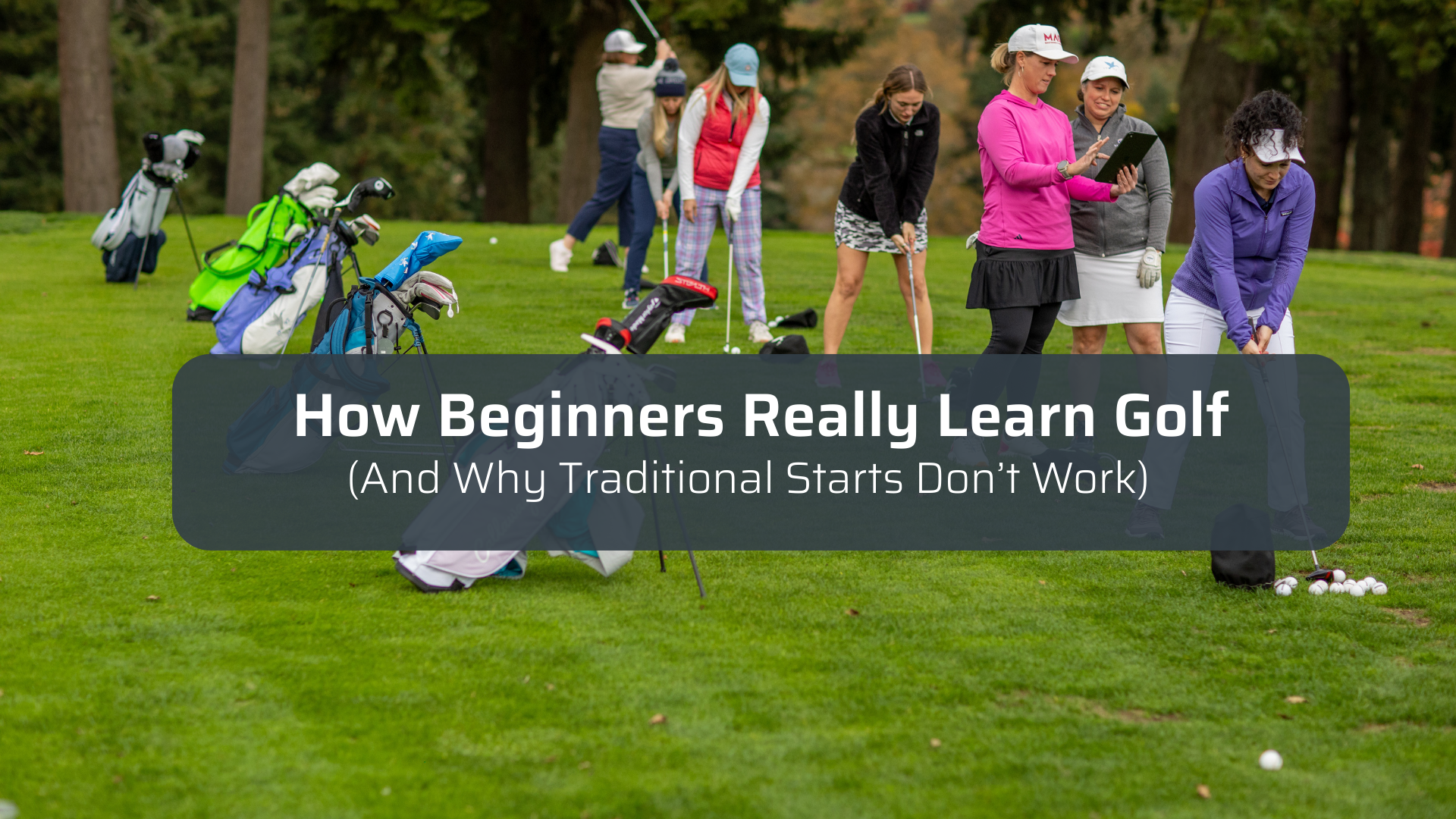

For decades, golf has welcomed beginners the same way:
start on the driving range, swing full clubs, aim at distant targets, and hope it eventually makes sense.
For many new golfers—especially juniors, parents new to the game, and adult beginners—this approach doesn’t just feel confusing. It feels discouraging.
If you’ve ever watched a child struggle to get the ball airborne, or felt overwhelmed yourself trying to hit shots you don’t yet understand, you’re not alone. In fact, research and real-world experience show that the traditional way of starting golf is one of the biggest reasons beginners quit.
So how do beginners really learn golf?
Let’s break it down.
Most beginners are introduced to golf in ways that assume far too much, far too soon:
Imagine learning to drive by being placed on the freeway before you’ve practiced steering or braking. That’s essentially what happens when beginners are expected to hit long shots before understanding how to score, how to play a hole, or even how success is measured in golf.
This approach often leads to:
And eventually, many beginners—kids and adults alike—decide golf just “isn’t for them.”
Beginners don’t learn golf by chasing perfect swings.
They learn golf by experiencing success early and often.
Here’s what research, coaching experience, and modern player development models consistently show:
Confidence grows when a task feels possible.
Shorter distances, simple goals, and clear expectations help beginners understand:
When golfers experience small wins, they stay engaged—and motivation follows.
Golf isn’t played on a driving range. It’s played on a course.
When beginners start on the course (at appropriate distances), they:
This context helps practice mean something—instead of feeling random or disconnected.
One of the most overlooked needs of new golfers is feedback they can understand.
Beginners thrive when:
When golfers know exactly what success looks like, they feel empowered rather than judged.
Modern beginner development models, like Operation 36, flip the traditional script.
Instead of asking beginners to hit long shots immediately, they start closer to the hole and:
This approach mirrors how people learn anything new - step by step, with clarity and encouragement.
Kids stay engaged when:
When juniors learn golf in a structured, confidence-building way, they’re far more likely to stick with the game long term.
Parents want:
Understanding how golf should be learned helps parents choose programs that prioritize growth over frustration.
Many adult beginners didn’t grow up playing golf, and that’s okay.
A welcoming learning environment:
Golf should feel accessible, not exclusive.
Good beginner golf isn’t about perfect swings or long drives.
It’s about:
When beginners feel capable, supported, and successful, everything else follows.
Beginners don’t quit golf because it’s hard.
They quit because it’s taught in a way that doesn’t make sense for beginners.
When golf instruction:
More people stay.
More people enjoy the game.
And more people discover that golf is for them.
Whether you’re a parent, a new golfer, or a coach looking to grow the game the right way, understanding how beginners truly learn golf is the first step.
👉 Explore beginner-friendly programs and learn more about the Operation 36 approach at operation36.golf