
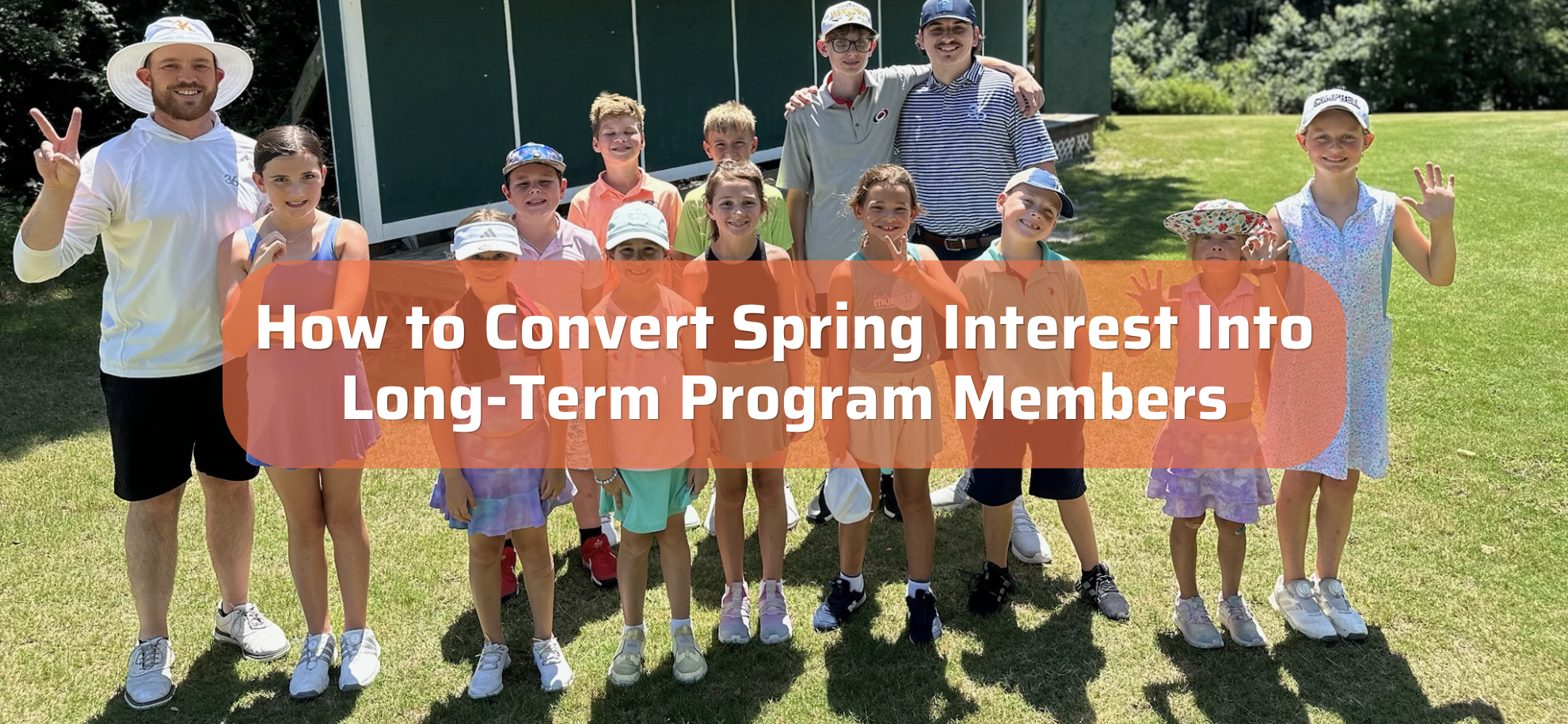

How to Convert Spring Interest Into Long-Term Program Members
May 2026 · Operation 36
Every spring, it happens. A parent spots your program while scrolling through their phone and thinks, my kid would love this. An adult who has always wanted to try golf finally decides this is the year. They reach out. They show up for a trial lesson or an open house. They seem genuinely excited.
And then, a few weeks later, you never hear from them again.
It's not because they didn't enjoy it. It's because no one gave them a clear reason to stay. Spring brings two distinct waves to your facility: parents looking for something meaningful for their kids and adults who are finally ready to give the game a shot. What you do in those first few interactions determines whether that curiosity turns into a committed golfer or just a nice conversation you had in April.
The window is shorter than you think
Here's what most coaches underestimate: a new golfer's enthusiasm has an expiration date. Not because they're flaky. Because life is busy and golf is unfamiliar. When something feels hard and there's no clear next step, people quietly move on.
That window between "I'm interested" and "I'm committed" is usually about two weeks. What happens in that window is everything.
The coaches who retain beginners aren't necessarily the best teachers. They're the ones who make the path forward feel obvious. After every first interaction, whether it's a trial lesson, an open house, or a quick email inquiry, the new golfer should know exactly what comes next and feel genuinely welcomed into something, not just sold something. And that goes for the parent enrolling their eight year old just as much as the adult who showed up alone on a Saturday morning.
That means a follow-up message within 24 hours. It means a specific invitation to the next session, not a generic "let us know if you want to sign up." It means the difference between a warm lead and a missed opportunity.
Give them a win before they're ready for one
The single most powerful thing you can do for a new golfer in the first two sessions is engineer a moment where they feel successful. Not "good for a beginner" successful. Actually successful.
This is where the Operation 36 model does the heavy lifting. When students start from 25 yards and shoot real scores toward a real hole, something happens fast: they realize they can do this. That realization is stickier than any marketing you'll ever run. And it works just as powerfully for a ten year old as it does for a forty year old picking up a club for the first time.
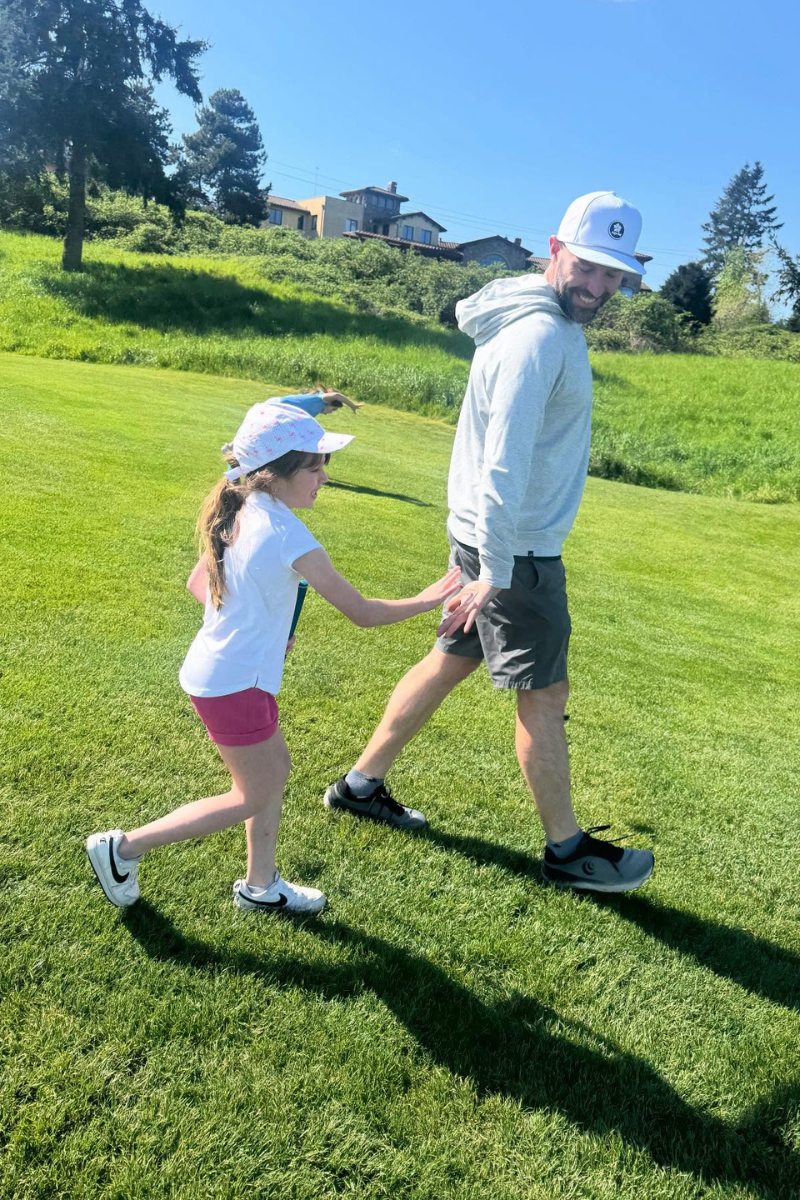
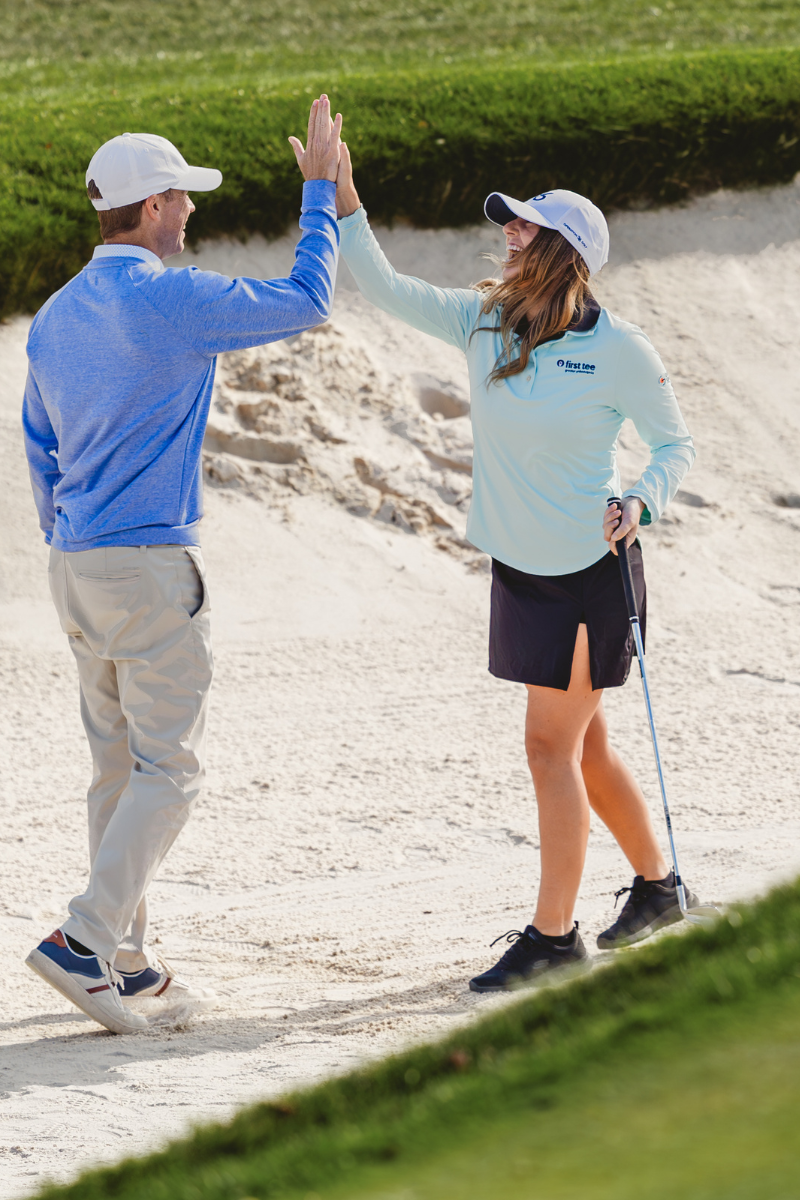
A junior golfer who chips onto the green and watches the ball roll toward the hole goes home and tells their parents about it. An adult who walks off having shot a 34, even from close range, is not the same person who walked on. They've crossed a threshold. They're a golfer now. And golfers come back.
Your job in spring isn't just to teach the fundamentals. It's to create that threshold moment as quickly as possible, then give people a community to belong to on the other side of it.
Community converts curiosity into commitment
The coaches with the strongest retention numbers share one trait: their programs feel like a group, not a series of individual lessons. New golfers don't just come back for the instruction. They come back because they'd miss the people.
That's true for kids who look forward to seeing their friends at Saturday morning sessions, and it's equally true for adults who finally found a group where they don't feel out of place. Both are looking for belonging just as much as they're looking for better golf.
You don't need a big facility or a large staff to build that. You need consistent group sessions, a way for students to track their progress together, and a coach who calls students by name and remembers what they're working on.
Spring is the best time to establish these habits because the energy is already there. Beginners are excited. They want to belong to something. Your job is to give them something worth belonging to and then make sure they know the door's open every week.
The golfers who find that in May are still with you in October. And they're the ones who bring their friends and their kids.
Ready to build a program that grows all year long?
Join the coaches who are using Operation 36 to create thriving beginner programs, retain more students, and grow the game in their communities.
Become an Op36 Coach