
Your four-year-old just grabbed your putter and started whacking a tennis ball across the living room. And now you're wondering: is this a sign? Should we be signing up for lessons? Is it too early? Too late?
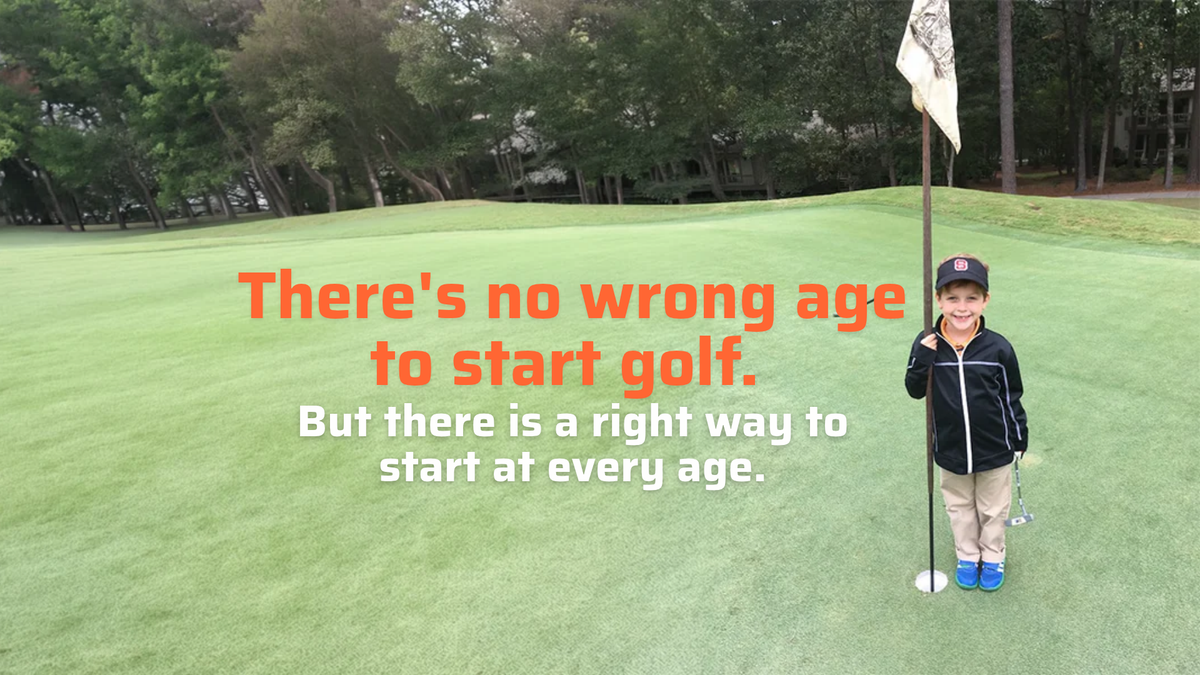
Here's the good news. There's no wrong age to start golf. But there is a right way to start at every age, and it looks pretty different for a 4-year-old than it does for a 12-year-old.
Ages 3 to 5: Play first, golf second
At this age, golf is a toy. And that's exactly how it should be. Plastic clubs in the backyard, putting into a cup in the hallway, rolling balls at a target. You're not teaching a swing. You're teaching that hitting a ball toward something is fun.
If your little one can focus for 20 to 30 minutes and loves to throw, kick or swing at things, a short group class built for young kids can be a great fit. Look for lots of games, lots of movement, and zero lectures about grip.
Ages 6 to 9: The sweet spot
This is when most kids are ready for real instruction. They can follow simple directions, they love keeping score, and they're starting to care about getting better.
Here's the thing most parents don't realize: kids this age don't need to hit off a full-length hole to learn the game. In fact, sending a 7-year-old to the regular tees is a fast way to make them hate golf. Ten swings to reach the green isn't fun for anyone.
That's why Operation 36 starts kids just 25 yards from the hole. They play real holes, keep real scores, and try to shoot 36 or better over 9 holes. Once they do it, they move back. The progress is obvious, and so are the small wins.
Ages 10 and up: Never too late
Maybe your 11-year-old just got invited to play with a friend's family. Maybe your 14-year-old is burned out on travel soccer and wants something new. Good news: older kids often learn faster because they can handle more technical coaching and practice with more focus.
The key is skipping the embarrassment. Starting close to the hole means a 13-year-old beginner can post a respectable score right away, instead of feeling behind kids who started at six.
So, when is your kid ready?
A few quick signs: they can pay attention for half an hour, they enjoy hitting or throwing things at targets, and they're asking to go. That last one matters most. Kids who choose golf stick with golf.
If your child checks those boxes, find a beginner program that starts close to the hole and keeps it fun. You can find an Operation 36 program near you and see what a first class looks like.